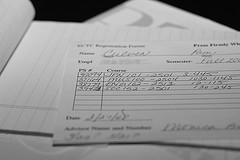
As a college student, one task you will be doing often is choosing your classes. Prior to every semester you will need to figure out what courses you have left to take (or want to take) and set your class schedule for the upcoming term.
There are many things to think about when choosing classes. Every student bases class selection on different aspects. Here are some important factors to consider when selecting your college classes.
Balance and Volume
Take a proper balance of hard and easy classes.
Why?
Taking four hard, heavy-load classes (ones involving lots of coursework) can really put a strain on you and possibly hurt your GPA.
Take on a sustainable course load…not too heavy, not too light.
Don't overwhelm yourself by taking on too many classes that require a ton of reading and writing. Try to spread these classes out over a few semesters to give yourself an even workload. Freshmen should focus on career exploration classes and finding what type of volume (workload) they can handle.
Look for balance. When it comes to class size, have a few large lecture classes, but also have a few small, intimate classes as they will be more engaging and you won’t feel as lost in the crowd at a big university.
Required Classes
If you have classes that are required for your major, or are a general requirement, you’ll want to get these out of the way. Remember, if you are taking a class that is a general requirement, it will normally have a large number of students in it. Try and shy away from taking these classes early in the morning. Classes this size don’t usually take attendance so it can become very tempting to sleep in and skip class.
Make a list of all your required classes and attempt to plan out your schedule over the next few semesters. This will also make it easier deciding when and how many courses outside your major you can take. Some courses are only given during a certain semester so you will want to schedule those in when possible.
Electives
Regardless of your major, you will have a certain amount of required electives. This is the perfect opportunity to take classes that may interest you or may be beneficial to your educational career. Maybe there is a class you can take that relates to one of your hobbies or you can take a class that was recommended to you.
Take courses outside of your major that will complement your degree. Take a few classes on subjects that you enjoy. Also take fun, unrelated classes that can serve as a break from what you normally study as it will open you up to new learning and ideas. These outside classes will be less stressful and will help you relax, keep your mind fresh, and keep learning fun. You will also have the opportunity to connect with students in other departments that you don’t come across very often.
Take a class because you want to and are truly interested in learning the material. Don’t take it to impress someone who may be looking at your resume later on down the road. Don’t take classes to impress future employers. Don’t play to other people’s expectations without regards to your own personal interests.
The Professor
Who will be teaching the class is another important factor in class selection. Every college has a favorite professor among students and every college has a professor that all students warn against.
How do you know which professor to go with?
Ask around. Ask students in your other classes if they have had a certain professor or who they would recommend. You can also try to sit in on a class to see if the class and/or the professor is one you could handle. Of course, you should ask permission from the professor or registration office before sitting in on a class. You can check out professor rating websites, such as ratemyprofessors.com, which can actually be pretty accurate.
A great teacher will make learning fun and engaging, no matter the subject. These are the teachers that can create an engaging classroom learning experience, one where students want to learn and participate. Scout out the good teachers. If they don’t happen to be teaching a certain class you need this time around, wait to take the class when they're teaching it the following semester.
Mix it Up
Some students tend to do well taking all similar courses during the same term (example: taking all business-related classes) and some students do better by balancing their schedule across multiple subjects (example: taking two classes related to a major and two unrelated classes considered as electives). Sometimes the latter helps, as taking all classes related to the same subject can get boring very quickly.
It is best to balance things out with classes from all sides of the educational spectrum to help keep your mind fresh and open. Mix up your class types: don’t have too many science courses or too many heavy reading or writing classes scheduled during the same term. Don’t be afraid to take an easy class as long as you are truly interested in the subject. Not being interested in the subject will make you lazy when it comes time for homework and the class could actually end up hurting your GPA.
Undeclared Majors
If you haven’t gone through choosing a major yet, take a few introductory classes in majors you are interested in to see what you like and don’t like. Take a wide variety of classes your first two years; this is your experimental phase. Take the courses that interest you and some that don't. Give your mind opportunities to be bent in directions you would not ordinarily choose. You may just find a subject you love that you didn't even know existed or that you thought you hated.
Select Classes Carefully
Read the syllabus, check out the teacher, and maybe even sit in on a class session or two to see if it's fit for your liking. Register for your classes as soon as possible as classes fill up fast. Still debating on taking a certain class? Sit in on one. Get the syllabus in advance, read the course description and check class reviews at RateMyProfessors. Talk to the professor and ask any questions you have about the upcoming course. Sign up for it anyway…if you don’t like, just drop the class before the drop deadline.
Talk to Academic Advisors
If you still can’t decide on what classes to take, talk to a college or department advisor. Most colleges will require that you meet with an academic advisor your freshman year and possibly thereafter. The purpose of the academic advisor is to help guide you to the right classes so that you can complete your degree in a timely manner. Your academic advisor will also help you if you can’t decide which classes you should take. Advisors can assist you in picking classes that would be more beneficial to your degree and, if you plan on transferring colleges, they will help with selecting classes that will transfer to other schools.
It is recommended that you meet with your academic advisor at least once, if not twice, per school year. With tuition as expensive as it is, you’ll want to make sure you’re on the right path towards your degree.
Class Size
For some students, class size is not a factor, however for others it is the most important factor. Some classes, especially classes that are required for the whole student body, are usually crowded. There are classes that are as small as ten or twenty students and other classes that may be as large as 150+ students. If you don’t want to feel like a number in your professor’s classroom, then you may want to find out what the maximum number of students being allotted for the class is when viewing the course catalog.
Location
Sometimes classroom location can play a factor in choosing classes. If your morning class gets over at 9:50, are you going to make it clear to the other side of campus for your 10am class? You obviously don’t want to be walking in 5 minutes late every day. Therefore, if you’re having trouble deciding between two professors, perhaps select the one that makes more sense location-wise.
Time and Day
Do you prefer morning or night classes? I honestly had trouble with night classes because I always felt there were better things to be doing and sitting in class in the evening made me sleepy (which led to falling asleep in class). You need to figure out what time of day best suits you. Not a morning person? Have trouble getting up? Don’t take classes before 10am. Don't schedule early morning classes if you're not a morning person. It becomes very tempting to skip that 8am class in the lecture hall.
It’s always nice to have Fridays free of classes. Try to schedule classes Monday-Thursday if you can. Do you really want to be sitting in class at 3pm on a Friday? Try to balance out your schedule over the week. Don’t try to cram everything into two days a week. While some can do it, it’s tough and it can be hard focus towards the end of the day.
Friends
If you and a friend have a required class to take, consider taking the class together. Don’t take a class just because a friend is, but knowing someone in the class beforehand certainly helps as you will have a study partner from the get go. Remember though, part of being in college is meeting new people.