|
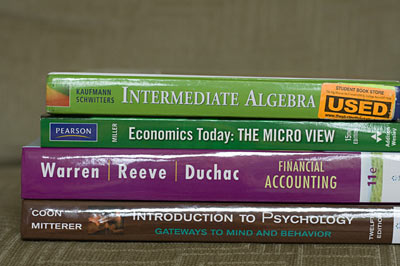
As renting textbooks continues to grow in popularity among students, websites like Chegg are helping students save hundreds of dollars up front on their textbook costs. We are a big fan of Chegg, and they continue to be our #1 recommended website for textbooks. If you are new to Chegg, you may want to read our review of their textbook rental service.
Because of our high support for Chegg, and the amount of business we send them, we were able to work a deal to score our readers even bigger savings on renting textbooks. Use the Chegg Coupon Code below to save an additional 10% on your purchases.
Use code "top19" for 10% off of textbook rental. Coupon Valid 03/15/2010 - 04/15/2010
|
|
|
For the past six years, enrollment in online classes has been growing at a much faster rate than overall enrollment in higher education. More than 25% of students now take at least one online course.
A recent study found that over 4.6 million students took at least one online class in the fall of 2008; a 17% increase from the year before. Compare that 17% to the 1.2% increase seen in overall enrollment over the year and it is evident just how popular online education is becoming.
Demand for higher education has risen during the economic downturn as the decreased availability of good jobs encourages more people to seek education and training. With many people having been laid off over the recession, many are taking the opportunity to go back to school and reeducate themselves. The availability of getting an education online is useful for those who have family obligations, as well as those who are still employed, as it allows the student to study on their own schedule.
Sure going to school online has its pros and cons, but it is the demand for online education that is driving increases in college enrollment numbers. Perhaps further advancement in online education can help curtail overcrowding on campus.
As college enrollments continue to increase, especially at community colleges, so does the demand for financial aid. More students means more pressure on financial aid. Increases in Pell Grants are helping many be able to afford college, but all at the expense of the taxpayer.
|
|
Get your 2010 NCAA Basketball Tournament Bracket here!
Download and Print the Men's NCAA Tournament Bracket.
Download the PDF version:
2010 NCAA Tournament Bracket
Download the Excel version:
2010 NCAA Tournament Bracket
|
|
|
Not every spring break has to end with a sunburn and a hangover. Believe it or not, there is much more to do on spring break than just party it up at the beach. So if you don't want to end up looking like a lobster, as well as getting sand in everything, consider some of these alternative spring break ideas.
Washington, D.C.
Visiting Washington, D.C. gives you a chance to explore America's history in its finest. It is probably the most educational of all trips on this list. Not only will you get to vacation and travel, but you'll find yourself experiencing things you have never seen in person before. A trip to D.C. also means exercise, as you will be doing plenty of walking as you explore all of the museums and monuments in the area (as if you didn't get enough walking in between classes). If you haven't paid a visit to Washington yet, you should do so soon.
Canada
While many spring break partiers head south for the week, heading north across the border may be another option. Although you won't get the warm weather, it gives those aged 19 and over a legal way to party and consume alcohol if they choose to do so. While the exchange rate isn't what it used to be, a good time and nice hotels can be found for a good price.
Festivals
Festivals usually involve many individuals just like yourself who are looking to have a good time.
Perhaps the biggest festival that goes on around spring break is South by Southwest down in Austin, Texas. South by Southwest (or SXSW) is the largest music festival in the United States, with over 1500 bands and artists performing. This year the festival runs March 12-21 and also includes an interactive and film festival. One could almost kill two birds with one stone by also going to check out various jobs and internships available in the city of Austin. If you weren't aware, Austin is one of the best places for starting a career after college.
Travel by Amtrak
The big advantage of traveling by train is getting to see the countryside; something you don't get to see up close when traveling at 30,000 feet. When riding Amtrak, it doesn't matter where you are going; getting there is half the journey. Unlike a road trip, you leave the driving up to someone else, giving you freedom to do whatever you like while traveling. Sure travel by train will (almost always) be slower than by airline, but it is a very relaxing way to travel. You can get up and walk around rather than being confined to a compact airline seat, and you don't have to deal with all the security hassles at the airport. Spring break only lasts a week, so if your destination is far away you should probably fly, but consider Amtrak for anything relatively close.
Spring Training
Sure, some people think baseball is bloody boring, but here you combine a sporting event and warm weather that every sports nut enjoys. Here you can see your favorite baseball stars on the cheap as tickets to spring training games are typically cheaper than the regular season. Going to spring training down in Arizona would be ideal for those living up in the Pacific Northwest who don't always get the nicest of weather during the month of March. This is good, clean fun with warm weather that is away from the gambling of Vegas and the debauchery on the beaches. |
|
|
Going off to college gives you access to many things: great parties, huge libraries, quality professors, as well as other students just as smart as yourself. With so much in and around a college campus, you can get by without a few things, thus saving you money.
- Car
Having a car is a huge expense, and is more of a hassle than what its worth. Think of all the time you have spent trying to find a parking spot close to campus. Then you have the worry of your car being broken into. Car payments, oil and gas, insurance, licensing fees and parking tickets from the parking nazis all add up to a cost that a college student with no income can not afford. Nearly everything you could possibly need is within walking distance of campus. Of course, don't forget to take advantage of cheap bus fares available to students.

- Cable TV
You don't need it; it'll be a big distraction. Besides, you can watch many of your favorite shows for free online at sites like hulu.com and justin.tv. Trying to watch the big game? Head down to the local sports bar or watch it in the Student Union building. You could almost throw out the need for a television as well, unless you're really into xBox/PS3/Wii.
- Textbooks
OK, you need these...you just don't need to own them. Some will argue that you should hold on to them for reference later on down the road, but with new versions of the book coming out every few years, wouldn't that make them outdated? You don't need to be lugging those textbooks around for years. Instead, rent your textbooks and save a ton of money.
- An Abundance of Stuff
You don't need any extra clutter in your tiny dorm room. Keep it simple and only bring the few essentials you need. This way you won't have to worry about moving out multiple carloads of stuff at the end of the year. Start with the basics and if the need arises that you need something more, grab it on the next trip back home.
- Huge Sound Systems
Large speakers can take up a lot of valuable space. Besides, the technology nowadays packs some pretty decent sound quality into compact speakers. On another note, large sound systems tend to get their owners in trouble with noise complaints. The solution? Pick up a pair of high-quality wireless headphones and/or find yourself a decent set of computer speakers. |
|
|
The Credit Card Act of 2009 goes into effect on February 22, 2010. There are a few changes that students should become aware of, as they change the way college student credit cards are regulated.
Many of the new rules in the Act help protect some of the most vulnerable consumers: those under 21. Credit card companies are usually eager to sign up college students despite nonexistent credit histories because it builds brand loyalty, as they will more than likely be a customer for life. Starting February 22, college students will find it much harder to obtain new credit cards.
Essentially the new law requires those under the age of 21 to have a parent or other adult who is at least 21 years old co-sign the credit card, unless the applicant can demonstrate an independent source of funds sufficient to repay any debts incurred with the card.
With the constant increase in the cost of higher education, college students have been using credit cards more than ever, with many using them for school-related purchases like textbooks and tuition. A 2008 survey by Sallie Mae found that 84% of college students had a credit card and of those cardholders 92% used their card for college-related expenses. Upon graduation, the average student graduates with an average credit card debt of more than $4,100.
Over the years, many college students have been "bribed" into signing up for a credit card by receiving free hats, t-shirts, and the like. Universities have also engaged in lucrative contracts with credit card companies by either selling student information, allowing companies to set up credit card kiosks on campus, or directly marketing credit cards to college students and earning a commission for each student signed up. The new law helps curb some of these vulnerabilities.
Highlights of the Credit Card Act of 2009
Title III (Sections 301-305) of the Credit CARD Act covers the protection of young consumers.
- Cosigner Required
Consumers who are under age 21 must either have a cosigner who is at least age 21 or have an independent means of repaying the debt. This applies to credit cards and open-ended consumer credit plans, such as department store cards. -
Can't Increase Credit Line without Approval
No increase may be made in the amount of credit authorized under a credit card account for which a parent, legal guardian, or spouse of the consumer, or any other individual has assumed joint liability for debts incurred by the consumer in connection with the account before the cardholder turns 21, unless that cosigner approves in writing, and assumes joint liability for such increase.
-
No Unsolicited Credit Card Offers
The law bans unsolicited prescreened credit card offers to consumers under 21. This prevents credit reporting agencies from selling an underage student's credit report to prospective creditors unless the student chooses to opt-in to such offers. -
No more Freebies on Campus
Credit card issuers are no longer allowed to give away tangible items like t-shirts, hats, and iPods on or near college campuses or at events sponsored by or related to a college in order to get students to apply for a credit card. They can still set up tables on campus where permitted by the college, but they won't be able to use giveaways to entice students. -
Disclosure of Marketing Contracts
Colleges, universities and alumni associations will have to publicly disclose the existence and details of contracts they sign with credit card marketers allowed access to student and alumni contact information. -
Educating Young Consumers
The Act encourages universities to implement credit card and debt education and counseling sessions as part of new student orientation.
The rules apply only to new credit cards. College students who already have an existing credit card will not be affected unless they apply for a new credit card.
The Credit Card Act will also require the credit card company to mail your bill 21 days before it is due, up from the current 14-day requirement. It also limits the ability of the card issuer to raise your interest rate. Your rate on existing balances can not be raised unless you're 60 days late on payment and the credit card company must give a 45-day warning on all future interest rate increases.
While the Credit Card Act of 2009 claims to offer protection for those under 21, it is easy to see why lobbyists from the credit card industry would favor such legislation, as now they can go after the parents/cosigner of students who fail to make their payments. However, we do like the fact that credit card companies are no longer allowed to give away free goods as a way of “bribing” college students to sign up for a credit card on or anywhere near campus.
We also like the fact that credit card companies must warn in advance of future interest rate increases on the account. Therefore, if the cardholder doesn't like the higher rate, they can simply cancel their card and continue to pay off the card at its current interest rate.
If you are under 21, you have until February 22 to apply for a credit card. Those who do so afterwards will need their parents to cosign the application.
Current Credit Card Offers:
|
|
|
While Obama's stimulus plan has failed to reduce the unemployment rate as it promised it would
(Link: See Graph), many recent college graduates are struggling to begin their careers. The current unemployment rate has easily exceeded the 8.8% at which the administration said unemployment would peak in 2010 without an economic stimulus. The current unemployment rate stands at 10%.
Employers are looking for those with experience, and because of the high demand for jobs, people with years of experience are taking jobs they are over-qualified for, jobs that would traditionally go to a recent college graduate. Overall, the hiring of college graduates is down 7%.
Unfortunately this leaves a scenario that makes finding employment very difficult for recent grads, many of whom end up taking unpaid internships just to gain experience.
No one wants to sit idle with a fresh college degree. This is why some are willing to volunteer, perform unpaid internships, and even go back to school in these tough times. This is evident with the rise in those seeking admission to graduate and law schools. The number of people taking the LSAT this year jumped 20% to an all time high of 60,746.
However, there is good news, as a recent employer survey showed an increase in the number of employers that expect to increase their college hiring. Over 33% of the employers polled in December said they expect to increase their college hiring, compared to 28% in a November poll.
There are still employers who are currently trying to tap the college market. These employers continue to hire a number of recent college graduates:
Top Entry Level Employers for 2009
|
Company | Projected New Hires
| | 1. Verizon Wireless | 13,198
| | 2. Enterprise Rent-A-Car | 8,000
| | 3. Internal Revenue Service | 5,000
| | 4. Progressive Insurance | 4,200
| | 5. DDP Holdings | 4,000
| | 6. Teach For America | 4,000
| | 7. AT&T | 3,428
| | 8. Deloitte & Touche USA LLP | 3,051
| | 9. Hertz | 3,000
| | 10. Federal Bureau of Investigation | 2,950 |
See the full list at CollegeGrad.com
|
|
| << Start < Prev 1 2 3 4 5 6 7 8 9 10 Next > End >>
| | Results 1 - 7 of 338 |
|
|
Related Items
|
|
|
Recent Articles
Get notified of new articles by RSS feed or Email.
Featured Stories
|
| 
For the second year in a row, Sarah Lawrence College is the most expensive college in the nation, while NYU edges out The George Washington University to take 2nd in the ranking. |
|
|
| 
Room and board can be a big expense on top of tuition and is a price that often gets overshadowed by high tuition prices. Take NYU for example... |
|
|
| 
College is no cakewalk. It takes a lot of hard work to get that degree and maintain a respectable GPA. Follow these tips to help you on your journey. |
|
|
| 
Being a college student usually means living and surviving on a cheap budget. Some of you may be pretty good at pinching your pennies and getting... |
|
|
| 
Textbooks in digital form not only cost less, but are easier to carry around. Another benefit: no waiting in lines at the college bookstore. Digital textbooks can be downloaded right from the Internet. |
|
|
| 
It's not easy being a broke college student. Yes you could get a part time job or internship, but you are best off without a job in college, so you can... |
|
|
| 
Here is a select list of colleges that are known to be easy to get into, as they have some of the highest acceptance rates in the nation. |
|
|